Road Trips USA Trip Ideas & Planning
Road Trips USA trip ideas – Road Trips USA: Trip Ideas & Planning – Dreaming of an epic American adventure? Hitting the open road offers unparalleled freedom and the chance to discover hidden gems and iconic landmarks. This guide dives into planning your perfect US road trip, from crafting the ideal route and budgeting effectively to choosing accommodations and ensuring a safe journey. Whether you’re a seasoned traveler or a first-timer, we’ve got you covered.
We’ll explore diverse routes across the country, detailing must-see attractions, and providing practical tips for managing your budget, finding the right lodging, and prioritizing safety. Get ready to transform your travel dreams into reality with our comprehensive guide to unforgettable US road trips.
Best US Road Trip Routes

Source: bigworldsmallpockets.com
Planning a US road trip is an adventure in itself! Choosing the right route can make or break your experience. This section details five diverse routes, offering a taste of the incredible variety America has to offer. Consider your interests and time constraints when selecting your perfect journey.
Five Diverse US Road Trip Routes
Below is a table summarizing five fantastic road trip routes across the United States. Each route offers unique experiences and scenic beauty. Remember that driving times are estimates and can vary depending on traffic and chosen detours.
| Route Name | States Visited | Key Attractions | Estimated Duration |
|---|---|---|---|
| Pacific Coast Highway | California, Oregon, Washington | Big Sur, Redwood National Park, Oregon Coast, Olympic National Park | 10-14 days |
| Route 66 | Illinois, Missouri, Kansas, Oklahoma, Texas, New Mexico, Arizona, California | Historic Route 66 towns, Grand Canyon National Park (optional detour), Petrified Forest National Park | 2-3 weeks |
| Blue Ridge Parkway | Virginia, North Carolina | Stunning mountain views, hiking trails, waterfalls, charming towns | 7-10 days |
| Southern Charm Route | Georgia, South Carolina, North Carolina | Savannah Historic District, Charleston Historic District, Outer Banks | 7-10 days |
| National Parks Road Trip (Southwest) | Utah, Arizona, Nevada | Zion National Park, Bryce Canyon National Park, Grand Canyon National Park, Las Vegas | 10-14 days |
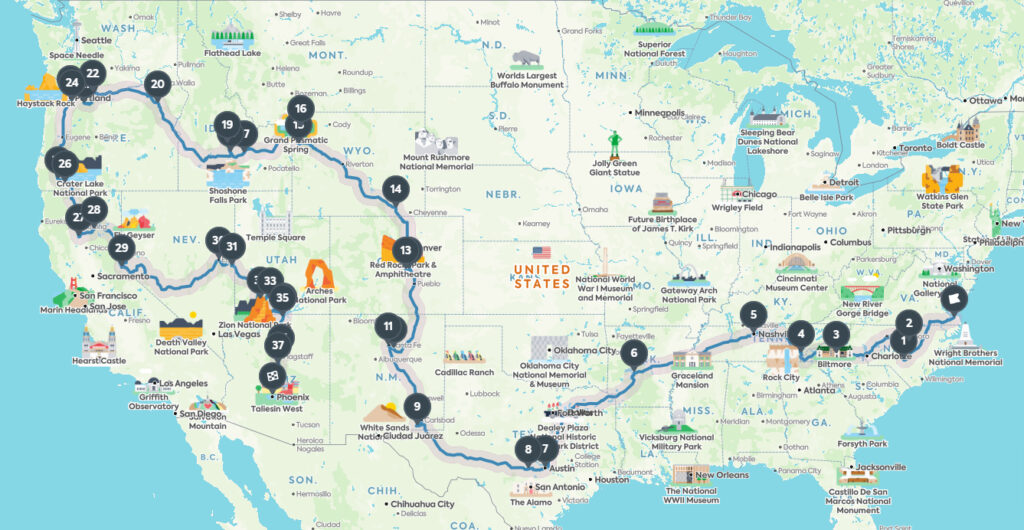
Visualizing the Routes: A Descriptive Map
Imagine a map of the continental United States. The Pacific Coast Highway route hugs the western coastline, showcasing dramatic cliffs, redwood forests, and sandy beaches. Route 66 cuts a diagonal path across the country, passing through diverse landscapes from prairies to deserts. The Blue Ridge Parkway winds through the Appalachian Mountains, a ribbon of road showcasing vibrant fall foliage and breathtaking vistas. The Southern Charm route traces a more southerly path along the Atlantic coast, highlighting historic cities and coastal beauty. Finally, the Southwest National Parks route loops through Utah, Arizona, and Nevada, emphasizing the dramatic canyons, mesas, and deserts of the American Southwest.
Tips for Planning Your Ideal Route
Choosing the perfect road trip route involves careful consideration. Here are three key tips:
First, prioritize your interests. Do you crave stunning coastal views, historical sites, or rugged national parks? Tailor your route to align with your preferences. For example, if you’re a history buff, Route 66 or the Southern Charm route might be perfect. If you love nature, the Pacific Coast Highway or the National Parks route are ideal.
Second, realistically assess your available time. The routes above offer estimated durations, but consider adding buffer time for unexpected delays or spontaneous detours. A shorter trip might focus on a single region, while a longer trip allows for exploring multiple states and attractions.
Third, factor in your travel style. Do you prefer luxury accommodations or budget-friendly options? Do you enjoy fast-paced sightseeing or a slower, more relaxed pace? These preferences will influence your lodging choices, daily mileage, and overall itinerary.
Budgeting for a US Road Trip: Road Trips USA Trip Ideas

Source: ourescapeclause.com
Planning a US road trip is exciting, but budgeting is crucial for a smooth journey. Failing to account for expenses can quickly turn your dream vacation into a financial headache. This section illustrates different budget levels to help you plan effectively. Remember that these are estimates, and your actual costs may vary depending on your travel style and the specific destinations you choose.
Budget Levels for a Two-Week Road Trip
Understanding the cost differences between budget, mid-range, and luxury travel is essential for realistic planning. These estimations assume a two-week trip for two people and include gas, accommodation, food, and activities.
- Budget: Expect to spend around $2,000 – $3,000 total.
- Gas: $300 – $500 (depending on fuel prices and distance driven)
- Accommodation: $700 – $1,000 (camping, hostels, budget motels)
- Food: $500 – $700 (mostly grocery shopping, occasional fast food)
- Activities: $500 – $800 (free or low-cost activities, national park passes)
- Mid-Range: A comfortable trip will cost approximately $4,000 – $6,000 total.
- Gas: $300 – $500 (similar to budget, but potentially more driving)
- Accommodation: $1,400 – $2,000 (mix of motels, budget-friendly hotels)
- Food: $800 – $1,200 (combination of restaurant meals and grocery shopping)
- Activities: $1,000 – $1,500 (variety of paid attractions and experiences)
- Luxury: Expect to spend $8,000 or more for a luxurious experience.
- Gas: $300 – $500 (less of a concern at this budget level)
- Accommodation: $3,000 – $5,000 (high-end hotels, resorts)
- Food: $2,000 – $3,000 (fine dining, upscale restaurants)
- Activities: $2,000 – $3,000 (premium tours, exclusive experiences)
Sample Seven-Day Mid-Range Budget Itinerary
This itinerary focuses on a route through California’s central coast, demonstrating daily expense tracking for a mid-range budget. Costs are per person.
This example assumes two people are traveling.
| Day | Location | Accommodation | Food | Activities | Total Daily Cost (per person) |
|---|---|---|---|---|---|
| 1 | San Francisco | $150 (hotel) | $75 (meals, snacks) | $50 (Alcatraz or Golden Gate Bridge visit) | $275 |
| 2 | Monterey | $120 (hotel) | $60 (meals, snacks) | $40 (Monterey Bay Aquarium) | $220 |
| 3 | Big Sur | $180 (cabin rental) | $50 (picnic, groceries) | $30 (hiking) | $260 |
| 4 | San Simeon | $100 (motel) | $60 (meals, snacks) | $60 (Hearst Castle) | $220 |
| 5 | Pismo Beach | $110 (hotel) | $70 (meals, snacks) | $40 (beach activities) | $220 |
| 6 | Santa Barbara | $140 (hotel) | $80 (meals, snacks) | $50 (State Street stroll, beach) | $270 |
| 7 | Los Angeles | $150 (hotel) | $75 (meals, snacks) | $50 (Griffith Observatory) | $275 |
Money-Saving Strategies
Employing smart strategies can significantly reduce your road trip expenses.
- Accommodation: Consider camping, staying in hostels, utilizing Airbnb for budget-friendly options, or opting for less expensive hotels outside major city centers. Look for deals and discounts online.
- Food: Grocery shopping is key. Pack snacks and lunches to avoid frequent restaurant meals. Utilize picnic areas at scenic spots. Take advantage of free breakfast options at hotels or motels. Look for local eateries and diners offering more affordable options than chain restaurants.
- Activities: Many national parks and state parks offer affordable or free entry. Explore free activities like hiking, biking, or visiting free museums or historical sites. Take advantage of free events and activities offered in the communities you visit. Look for discounts and deals on attractions through online platforms.
Accommodation Options During a US Road Trip

Source: indianeagle.com
Choosing the right accommodation is crucial for a successful US road trip. It impacts your budget, comfort level, and overall travel experience. This section will explore various options, helping you make informed decisions based on your priorities and travel style.
Comparing Hotel, Motel, and Camping Accommodations
Selecting your lodging depends heavily on your budget and desired level of comfort. Hotels, motels, and camping each offer distinct advantages and disadvantages. The following table summarizes the key differences:
| Feature | Hotels | Motels | Camping |
|---|---|---|---|
| Cost | Generally the highest | Mid-range, often more affordable than hotels | Lowest cost, especially if you have your equipment |
| Amenities | Wide range, including pools, restaurants, fitness centers, and often more luxurious options | Basic amenities, usually including a bed, bathroom, and sometimes a small pool | Basic amenities vary greatly depending on the campground; may include restrooms, showers, picnic tables, and fire pits. |
| Experience | Often more upscale and convenient | More basic but often conveniently located along highways | Immersive nature experience requires more self-sufficiency |
Unique and Memorable Accommodation Options Across the US
Beyond the standard hotels, motels, and campgrounds, the US offers a plethora of unique accommodation options that enhance the road trip experience.
Here are five examples:
- The Madonna Inn (San Luis Obispo, California): This iconic hotel boasts wildly themed rooms, each a unique work of art. Imagine staying in a room designed like a cave, a jungle, or even a fairytale castle. The whimsical decor and luxurious amenities create a truly unforgettable experience.
- Autocamp (various locations): Autocamp offers a “glamping” experience, blending the outdoors with modern comforts. These stylish Airstreams and cabins are equipped with luxurious amenities, providing a comfortable and unique way to experience nature.
- The McMenamins Kennedy School (Portland, Oregon): This former elementary school has been transformed into a quirky hotel with a restaurant, pub, and movie theater. The unique atmosphere and historical setting make it a memorable place to stay.
- Yurts at Glacier National Park (Montana): Experience the stunning beauty of Glacier National Park by staying in a yurt. These circular tents offer a comfortable and rustic way to immerse yourself in the natural environment, providing a closer connection to the park’s breathtaking landscapes.
- The Icehotel (Jukkasjärvi, Sweden – technically not in the US, but a great example of unique lodging): While not in the US, this is a prime example of unique lodging. Each year, this hotel is rebuilt entirely from ice and snow, offering a truly unforgettable (and very cold!) experience. This illustrates the range of unique options available globally, even if not within the continental US.
Booking Accommodations: Advance vs. Spontaneous
The decision of whether to book accommodations in advance or spontaneously depends on your travel style and preferences.
Booking in advance offers several advantages:
- Guaranteed availability: Especially during peak season, securing your lodging ahead of time ensures you have a place to stay.
- Better rates: You often find better deals and discounts when booking in advance.
- More planning flexibility: Knowing where you’ll be staying allows you to better plan your daily itinerary.
However, spontaneous booking also has its merits:
- Flexibility: You can adjust your route based on your experience and discoveries along the way.
- Potential for discovering hidden gems: You might stumble upon charming local accommodations you wouldn’t have known about otherwise.
- Last-minute deals: Sometimes, you can find great last-minute deals on accommodations.
Must-See Attractions and Activities

Source: thedailyadventuresofme.com
Planning a US road trip means choosing from a wealth of incredible sights and experiences. This section will help you prioritize, balancing iconic landmarks with hidden gems to craft the perfect itinerary. Remember, the best road trip is the one you design!
Ten Must-See National Parks
Choosing just ten national parks from the hundreds across the US is tough, but these represent a diverse range of landscapes and experiences. Consider your interests and the overall route of your trip when selecting which to visit.
- Yellowstone National Park (Wyoming, Montana, Idaho): Famous for its geysers (like Old Faithful), hot springs, and abundant wildlife, Yellowstone is a geothermal wonderland.
- Yosemite National Park (California): Iconic granite cliffs like El Capitan and Half Dome, giant sequoia trees, and stunning waterfalls make Yosemite a classic.
- Grand Canyon National Park (Arizona): The sheer scale of the Grand Canyon is breathtaking. Hike along the rim, descend into the canyon (challenging!), or take a mule ride.
- Zion National Park (Utah): Dramatic canyons, the Virgin River, and incredible hiking trails, including the iconic Angels Landing (permit required).
- Glacier National Park (Montana): Stunning alpine scenery, glaciers, pristine lakes, and abundant wildlife make this park a hiker’s paradise.
- Grand Teton National Park (Wyoming): Rugged mountain peaks, pristine lakes, and abundant wildlife, often paired with a Yellowstone visit.
- Acadia National Park (Maine): A stunning coastal park with granite peaks, forests, and dramatic ocean views. Perfect for hiking and exploring the rocky coastline.
- Great Smoky Mountains National Park (North Carolina, Tennessee): Misty mountains, diverse forests, and historic settlements. A great choice for hiking and enjoying nature’s beauty.
- Arches National Park (Utah): Hundreds of natural sandstone arches create a unique and otherworldly landscape. Delicate Arch is a must-see.
- Olympic National Park (Washington): A diverse park encompassing mountains, rainforests, and coastline. Offers a wide variety of activities, from hiking to tide pooling.
Five Iconic Roadside Attractions
These roadside attractions offer a glimpse into America and often tell fascinating stories. They are more than just photo ops; they are living pieces of history.
- The World’s Largest Ball of Twine (Cawker City, Kansas): Started as a hobby in 1953, this continuously growing ball of twine is a testament to the persistence and quirky Americana.
“It’s not just a ball of twine; it’s a symbol of community spirit and dedication.”
- Carhenge (Alliance, Nebraska): A replica of Stonehenge built entirely from vintage cars, Carhenge is a quirky and unforgettable roadside attraction.
“A testament to creativity and a unique twist on a historical landmark.”
- Route 66 Mother Road: While not a single attraction, the entire stretch of Route 66 is a journey through Americana, showcasing vintage diners, quirky roadside attractions, and historical towns.
“Get your kicks on Route 66″—a famous slogan that captures the spirit of the road.
- The Cadillac Ranch (Amarillo, Texas): Ten Cadillacs buried nose-first in the ground, a colorful and iconic piece of roadside art.
“A vibrant splash of color against the vast Texas landscape.”
- Lucy the Elephant (Margate City, New Jersey): A six-story elephant-shaped building, Lucy is a unique and historical landmark, built in 1881 as a promotional attraction.
“A whimsical reminder of a bygone era and a symbol of coastal charm.”
Creating a Balanced Itinerary, Road trips USA trip ideas
A successful road trip balances popular destinations with lesser-known gems. For example, you could combine a visit to Yosemite National Park with exploring the charming, less-crowded towns of the nearby Sierra Nevada foothills. Similarly, after seeing the Grand Canyon, consider a detour to explore the stunning Antelope Canyon or Horseshoe Bend, which are less crowded but equally spectacular. Research smaller national monuments or state parks near your main destinations to find unique experiences. Remember to factor in travel time between locations and allow flexibility in your schedule for spontaneous discoveries. Building in buffer days allows for unexpected delays or the opportunity to linger longer in a place you fall in love with.
Road Trip Safety and Preparedness

Source: sillyamerica.com
Embarking on a US road trip is an exciting adventure, but ensuring your safety and preparedness is paramount. A well-planned trip minimizes risks and maximizes enjoyment. This section covers essential items, crucial safety precautions, and effective communication strategies for a smooth and worry-free journey.
Essential Items for a Safe and Comfortable Road Trip
Having the right supplies can significantly impact your safety and comfort. A well-stocked vehicle is crucial for handling unexpected situations and ensuring a pleasant journey. Consider this checklist as a starting point, tailoring it to your specific route and travel style.
- Emergency Kit: This should include a first-aid kit with bandages, antiseptic wipes, pain relievers, and any personal medications. Also pack a flashlight with extra batteries, jumper cables, a basic tool kit (screwdriver, wrench), and reflective triangles or flares for roadside emergencies.
- Vehicle Maintenance: Check your tire pressure, oil levels, and fluids before you leave. Carry a spare tire, jack, and lug wrench. Consider purchasing roadside assistance for added peace of mind.
- Navigation and Communication: A GPS device or smartphone with GPS capabilities is essential. Download offline maps in case of limited cell service. Pack a portable charger for your electronic devices.
- Documents and Identification: Carry your driver’s license, vehicle registration, insurance information, and a copy of your itinerary. Consider leaving a copy of your travel plans with a trusted friend or family member.
- Comfort and Convenience: Pack snacks, water bottles, and any necessary medications. Include items for entertainment, such as books, audiobooks, or music. Consider a cooler for perishable items, especially on longer journeys.
Safety Precautions During a Road Trip
Driving across vast distances requires vigilance and adherence to safety practices. Being aware of potential hazards and proactively addressing them ensures a safer journey.
- Defensive Driving: Maintain a safe following distance, be aware of your surroundings, and avoid distractions such as cell phones. Regularly check your mirrors and be prepared to react to unexpected situations.
- Vehicle Security: Park in well-lit areas, lock your car doors, and avoid leaving valuables visible inside. Be cautious when stopping at rest areas or gas stations, and be aware of your surroundings.
- Weather Awareness: Check weather forecasts before and during your trip. Be prepared for changing conditions, such as rain, snow, or extreme heat. Adjust your driving accordingly and consider delaying your trip if necessary. For example, driving through a mountain pass during a blizzard would be extremely dangerous.
- Fatigue Management: Avoid driving when tired. Take regular breaks to stretch your legs and rest. Share the driving responsibilities if possible. Driving while fatigued is a major cause of accidents.
- Wildlife Awareness: Be especially cautious in areas with wildlife, such as national parks. Reduce your speed and be aware of animals that may cross the road, particularly at dawn and dusk.
Staying Connected and Managing Communication
Maintaining communication during your road trip is crucial for safety and peace of mind. Having reliable navigation and communication tools ensures you can stay connected with loved ones and handle unexpected situations.
- Cell Service: Recognize that cell service can be unreliable in rural areas. Download offline maps and consider purchasing a satellite communication device for areas with limited or no cell service. For example, many national parks have very limited cell service.
- GPS Navigation: Use a reliable GPS device or smartphone app with offline map capabilities. Plan your route in advance and regularly check your progress. GPS can be a lifesaver in unfamiliar areas.
- Emergency Contacts: Share your itinerary and emergency contact information with family and friends. Program important phone numbers, such as roadside assistance and local emergency services, into your phone.
- Communication Plan: Establish a regular check-in schedule with loved ones to let them know your progress. Consider using a satellite messenger if cell service is unreliable.
- Charging Solutions: Carry portable chargers for your electronic devices to ensure you always have a way to communicate and navigate.
Conclusion

Source: ourescapeclause.com
Planning a US road trip is an exciting adventure, and with careful preparation, you can create an unforgettable experience. Remember to tailor your itinerary to your interests and budget, prioritizing safety and flexibility. From breathtaking national parks to quirky roadside attractions, the USA offers an unparalleled diversity of experiences waiting to be discovered. So pack your bags, choose your route, and get ready for the journey of a lifetime!


