How to Budget Travel Your Guide to Affordable Adventures
How to budget travel? It’s easier than you think! This isn’t about sacrificing fun; it’s about smart planning and maximizing your experience without breaking the bank. We’ll explore strategies for finding cheap flights, affordable accommodation, delicious budget-friendly meals, and exciting free or low-cost activities. Get ready to discover how to travel more, for less!
This guide walks you through creating a realistic travel budget, comparing accommodation options (hostels, Airbnbs, etc.), finding the tastiest and cheapest eats, choosing smart transportation, and packing light. We’ll cover everything from booking flights and navigating local customs to handling unexpected expenses and making the most of your trip, ensuring you have an unforgettable adventure without overspending.
Planning Your Budget Trip

Source: digitaloceanspaces.com
Planning a budget trip requires careful consideration and a realistic approach. It’s about maximizing your travel experience while minimizing expenses. This involves meticulous planning across various aspects of your trip, from flights and accommodation to activities and daily spending. A well-structured budget ensures you enjoy your adventure without exceeding your financial limits.
Creating a Realistic Travel Budget
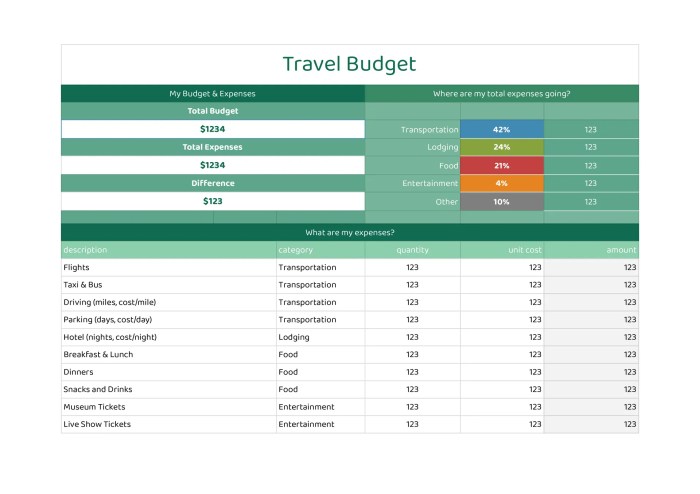
The first step is to determine your total budget. This depends on your savings and how much you’re willing to spend. Once you have this figure, you can start allocating funds to different aspects of your trip. Begin by estimating the costs for each category (flights, accommodation, activities, food, and transportation) and then adjust based on your priorities and research. Remember to include a buffer for unexpected expenses.
Sample Budget Breakdown: 7-Day Trip to Southeast Asia
This example focuses on a 7-day trip to Thailand, assuming a moderately budget-conscious approach. Prices are estimates and can vary depending on the season and your choices.
| Destination | Cost Category | Estimated Cost (USD) | Notes |
|---|---|---|---|
| Thailand | Flights (Roundtrip) | 600 | Prices vary greatly depending on origin and booking time. Consider budget airlines. |
| Thailand | Accommodation (7 nights) | 210 | A mix of hostels and budget hotels. Average $30/night. |
| Thailand | Activities & Entrance Fees | 140 | Includes temple visits, market exploration, and a cooking class. |
| Thailand | Food (7 days) | 140 | Eating at local eateries and street food stalls. |
| Thailand | Transportation (Local & Intercity) | 70 | Utilizing buses and trains for longer distances, and taxis/tuk-tuks for shorter trips. |
| Thailand | Miscellaneous (Souvenirs, etc.) | 40 | A buffer for unexpected expenses and small purchases. |
| Total | 1200 | This is an estimate; actual costs may vary. |
Saving Money on Flights
Booking flights in advance is often the most effective way to secure lower fares. Websites like Google Flights, Skyscanner, and Kayak allow you to compare prices across multiple airlines and identify the best deals. Being flexible with your travel dates can also significantly impact the cost. Mid-week flights and avoiding peak seasons generally offer better prices. Consider flying into smaller, less popular airports near your destination, as these often have cheaper flights. Lastly, utilizing airline loyalty programs and credit card points can provide additional savings.
Finding Affordable Accommodation: How To Budget Travel

Source: heymondo.com
Finding the right place to stay is crucial for budget travel. The cost of accommodation can easily eat up a significant portion of your travel budget, so choosing wisely is essential. This section will explore different options and strategies to help you find affordable and comfortable lodging during your travels.
Finding affordable accommodation involves weighing several factors: comfort level, location, and of course, price. Different types of accommodation cater to various needs and budgets. Let’s explore some of the most popular choices.
Types of Budget-Friendly Accommodation
Budget travelers have a surprising number of options to choose from. Hostels, guesthouses, Airbnb, and even budget hotels each offer unique advantages and disadvantages.
| Accommodation type | Pros | Cons | Cost range |
|---|---|---|---|
| Hostels | Very affordable; social atmosphere; often in central locations; sometimes include breakfast. | Shared rooms and bathrooms; can be noisy; less privacy. | $10-$40 per night |
| Guesthouses | More privacy than hostels; often family-run; local experience; sometimes offer breakfast. | Can be less centrally located; fewer amenities than hotels. | $30-$80 per night |
| Airbnb | Variety of options (private rooms, entire apartments); home-like feel; often kitchen facilities; can be cheaper than hotels. | Can be more expensive than hostels or guesthouses; with cleaning fees; and the potential for communication issues with hosts. | $20-$200+ per night |
| Budget Hotels | Private rooms and bathrooms; more amenities than hostels or guesthouses; often reliable. | Can be more expensive than other options; may lack character. | $40-$150+ per night |
Finding the Best Accommodation Deals
Several strategies can help you secure the best possible price for your accommodation. Booking websites offer comparison tools, allowing you to quickly see prices across different platforms. Negotiating directly with guesthouses or Airbnb hosts can sometimes lead to discounts, especially during the off-season or for longer stays. Consider traveling during the shoulder season (the period between peak and off-season) for better deals. Flexibility with your travel dates can also significantly impact pricing. For example, booking a trip mid-week instead of on a weekend often results in lower rates.
Eating on a Budget

Source: vacationmaybe.com
Eating affordably while traveling doesn’t mean sacrificing delicious food. With a little planning and resourcefulness, you can enjoy local cuisine without breaking the bank. This section will explore strategies for minimizing food costs and navigating cultural dining customs.
Eating on a budget while traveling often involves prioritizing simple, local foods and minimizing restaurant meals. By embracing the local culture and utilizing readily available resources, you can significantly reduce your food expenses.
Minimizing Food Costs
Smart food choices can significantly impact your travel budget. One effective strategy is to frequent local markets instead of relying solely on restaurants. Markets typically offer fresher produce and other staples at much lower prices than restaurants or tourist-oriented shops. Cooking your meals, even simple ones, is another powerful way to save. This allows you to control portion sizes and ingredient quality, avoiding the markups often associated with restaurant meals. Finally, consider taking advantage of happy hour deals at local bars and restaurants. These deals often extend to food, providing substantial savings on appetizers or small plates.
Budget-Friendly Food Options
The best budget-friendly food options will vary based on dietary needs and preferences.
- Vegetarians: Fruits, vegetables, legumes (beans, lentils), and grains are readily available and inexpensive in most parts of the world. Look for local variations of these staples at markets for the best prices and freshest flavors.
- Vegans: Similar to vegetarians, vegans can find affordable options in fruits, vegetables, legumes, and grains. Ensure to check ingredients carefully to avoid hidden animal products. Many cultures offer delicious vegan dishes using tofu, tempeh, or seitan.
- Dietary Restrictions: Travelers with dietary restrictions (gluten-free, dairy-free, etc.) may need more planning. Research restaurants and grocery stores in advance to ensure they cater to specific needs. Packing some non-perishable staples can provide a safety net.
- General Budget Travelers: Street food is often a delicious and affordable option. Look for popular local dishes sold by street vendors – these are usually authentic and much cheaper than restaurant meals. Also, consider buying groceries and preparing simple meals in your accommodation whenever possible.
Cultural Nuances of Eating
Understanding and respecting local dining customs is crucial for a positive and affordable travel experience. In some cultures, it’s customary to share dishes, which can be a cost-effective way to sample a variety of foods. In other cultures, certain foods might be considered taboo or inappropriate for certain occasions. Researching these cultural norms beforehand can prevent unintentional offenses and help you make informed choices. For example, in many Southeast Asian countries, eating with your hands is perfectly acceptable and even expected for certain dishes, while in others, using utensils is the norm. Always observe how locals eat and try to follow suit to show respect. Remember, asking questions politely can help you navigate unfamiliar dining situations. Often, locals are happy to share information and recommendations about affordable and authentic food options.
Affordable Transportation

Source: simulasikredit.com
Getting around without breaking the bank is a crucial part of budget travel. Choosing the right transportation method can significantly impact your overall trip cost. This section explores various affordable options and helps you make informed decisions based on your destination and travel style.
Different cities offer different transportation options, and the best choice often depends on factors like distance, frequency of travel, and personal comfort. Let’s delve into some popular budget-friendly choices.
Public Transportation Options
Public transport, encompassing buses, trains, subways, and trams, is often the cheapest way to explore a city. It’s generally well-integrated within urban areas, providing extensive coverage. However, it might not always be the fastest option, especially during peak hours. Many cities offer day passes or multi-day passes which can provide significant savings compared to single-journey tickets. Consider purchasing these passes before you start your journey to avoid queues at ticket counters.
Ride-Sharing Services, How to budget travel
Ride-sharing apps like Uber and Lyft offer a convenient alternative, especially for longer distances or late-night travel. While not always the cheapest option, splitting fares with travel companions can significantly reduce individual costs. The cost-effectiveness depends heavily on factors such as time of day, demand, and distance. It’s wise to compare prices with public transport before opting for a ride-share.
Walking and Cycling
Walking and cycling are fantastic ways to explore a city at your own pace, enjoying the sights and sounds along the way. They are completely free (except for potential bike rental fees), environmentally friendly, and offer a great way to experience a city’s atmosphere. However, they are only feasible for shorter distances and may not be practical for covering large areas or in areas with challenging terrain or unsafe conditions.
Transportation Cost Comparison
| Transportation Method | Cost | Pros | Cons |
|---|---|---|---|
| Public Transport (Bus/Train/Subway) | $5-20 per day (depending on city and pass type) | Affordable, widely available, covers large areas | Can be crowded, time-consuming during peak hours, and may require transfers |
| Ride-Sharing (Uber/Lyft) | Varies greatly depending on distance and demand; can be $10-$50+ per trip | Convenient, especially for longer distances or late-night travel | Can be expensive, particularly during peak hours or in areas with high demand |
| Walking | Free | Free, healthy, allows for exploration at your own pace | Time-consuming for long distances, impractical in large cities |
| Cycling | Free (if you own a bike) or rental fees (approx. $10-$20 per day) | Free/low cost, healthy, efficient for moderate distances | Requires physical effort, may not be suitable for all terrains or weather conditions, bike theft is a risk |
Sample City Tour Itinerary (Public Transport)
Let’s imagine a day trip to London using only public transport.
Morning: Start at Tower Bridge (easily accessible via the DLR or Tube). Explore the Tower of London (allow 2-3 hours). Estimated cost: Tube journey (approx. £3).
Afternoon: Take the Tube to Westminster (approx. £2.50). Visit the Houses of Parliament and Big Ben. Walk across Westminster Bridge to the London Eye (allow 1-2 hours). Estimated cost: Tube journey (approx. £2.50)
Evening: Take the Tube to Covent Garden (approx. £2). Explore the market and enjoy street performances. Have dinner in the area. Return to your accommodation using the Tube (approx. £2.50). Estimated cost: Tube journeys (approx. £4.50).
Total estimated cost for public transport: £12. This is just an example, and the actual cost may vary depending on the specific routes and fares.
Free and Low-Cost Activities

Source: windows.net
Budget travel doesn’t mean sacrificing fun! Many incredible experiences can be had without breaking the bank. By prioritizing free and low-cost activities, you can stretch your travel budget further and still create lasting memories. This section will guide you on how to find and plan these budget-friendly adventures.
Exploring a new city or region often reveals hidden gems that are free or surprisingly inexpensive. Knowing where to look and how to plan can unlock a world of affordable entertainment and cultural immersion. This section will help you uncover these hidden treasures and craft a memorable itinerary.
Free and Low-Cost Activities in San Francisco
San Francisco offers a fantastic range of free and low-cost activities. From iconic landmarks to hidden parks, there’s something for everyone.
- Walk or bike across the Golden Gate Bridge: While parking fees apply, walking or cycling across the bridge is free and offers breathtaking views. Consider starting early in the morning to avoid crowds.
- Explore Golden Gate Park: This sprawling urban oasis boasts gardens, museums, lakes, and even a Japanese Tea Garden (entry fee applies). A stroll through the park is completely free.
- Visit free museums on designated days: Many museums in San Francisco offer free admission on days or evenings. Check their websites in advance to plan your visit accordingly. The de Young Museum and the Asian Art Museum are examples of museums offering free admission on certain days.
- Take a free walking tour: Many companies offer free walking tours of various neighborhoods, focusing on different themes like history, architecture, or food. Tips are appreciated but not mandatory.
- Wander through diverse neighborhoods: Explore neighborhoods like Chinatown, North Beach, and Mission District, each offering unique cultural experiences and vibrant street life – all completely free.
Finding Free or Discounted Tickets
Several online resources and local information sources can help you secure free or discounted tickets to attractions.
Websites like Groupon, LivingSocial, and Goldstar often offer discounted tickets to various events and attractions. Check these regularly for deals in your destination. Additionally, many museums and attractions offer discounts for students, seniors, or members of specific organizations. Always check the official website of the attraction for potential discounts. Local tourism websites and visitor centers are also great resources for finding deals and free events. Local newspapers and magazines often feature listings of free community events and festivals.
Sample 3-Day San Francisco Itinerary (Free & Low-Cost)
This itinerary focuses on maximizing your experience while minimizing costs.
| Day | Morning | Afternoon | Evening |
|---|---|---|---|
| 1 | Walk across the Golden Gate Bridge (free) | Explore Golden Gate Park (free, except for optional paid attractions) | Free walking tour of Fisherman’s Wharf (tips appreciated) |
| 2 | Visit a museum with free admission day (check websites beforehand) | Explore Chinatown and North Beach (free) | Enjoy a picnic dinner in Dolores Park (free) |
| 3 | Hike a portion of the Lands End Trail (free) with stunning coastal views | Wander through the Mission District (free) and admire the murals | Attend a free outdoor concert or event (check local listings) |
Packing Light and Smart
Source: docsandslides.com
Packing light is a game-changer for budget travel. Less luggage means less to worry about, cheaper transportation costs (avoiding checked baggage fees), easier navigation, and increased agility. It simplifies your trip, allowing you to focus on experiences rather than lugging around unnecessary items.
The key to packing light is strategic planning and a ruthless assessment of what you truly need. Forget about “just in case” items – those rarely get used. Prioritize versatile clothing items that can be mixed and matched, and choose lightweight fabrics that dry quickly. Rolling your clothes instead of folding them saves space and minimizes wrinkles.
Packing List for a 7-Day Trip
This packing list is adaptable to various climates and activities. Adjust it based on your specific destination and planned activities. Remember, less is more!
- 4 versatile tops (mix and match with bottoms)
- 2 pairs of bottoms (jeans or trousers, and shorts or a skirt depending on climate)
- 1 lightweight jacket or sweater (layering is key)
- 1 pair of comfortable walking shoes
- 1 pair of sandals or flip-flops (if appropriate)
- Underwear and socks for each day (consider quick-drying materials)
- Toiletries (travel-sized containers are essential)
- A small, versatile bag (backpack or crossbody bag)
- Medications (prescription and over-the-counter)
- Universal adapter (if needed)
- Copies of important documents (passport, visa, tickets)
- Small first-aid kit
- Reusable water bottle
Efficient Packing Techniques
Efficient packing maximizes space and minimizes wrinkles. The key is to utilize every inch of your bag.
First, lay out everything you plan to take. Then, start by rolling your clothes tightly. This not only saves space but also helps prevent wrinkles. Place rolled clothes in your bag vertically, like stacking logs in a fireplace. This creates stable columns and uses space more efficiently than simply tossing clothes in. For delicate items, use packing cubes to organize and protect them. These compress clothes and keep them separated. Heavier items should go at the bottom of your bag, near the wheels if it’s a roller bag, for better balance. Place softer items like socks and underwear in any remaining gaps. Finally, use compression sacks to further reduce the volume of your clothes. Imagine you are building a three-dimensional puzzle, fitting pieces together to maximize space. A well-packed bag will be surprisingly compact and efficient.
Travel Insurance and Emergency Funds

Source: ourescapeclause.com
Budget travel doesn’t mean scrimping on essential protections. Unexpected events can quickly derail even the most meticulously planned trip, turning a budget adventure into a financial nightmare. Therefore, securing adequate travel insurance and setting aside emergency funds are crucial steps in responsible budget travel.
Travel insurance acts as a safety net, covering various unforeseen circumstances. It can protect you against medical emergencies, trip cancellations, lost luggage, and even personal liability. While it adds a cost upfront, the potential savings and peace of mind it provides far outweigh the expense, especially when considering the potential costs of medical treatment abroad.
Choosing a Suitable Travel Insurance Plan
Selecting the right travel insurance plan depends on your individual needs and the specifics of your trip. Consider factors like the length of your trip, your destination’s medical infrastructure, your planned activities (e.g., hiking, extreme sports), and your pre-existing medical conditions. Compare plans from different providers, paying close attention to coverage limits and exclusions. Look for plans that cover medical emergencies, evacuation, trip cancellations, and lost luggage. Read the fine print carefully to understand what’s covered and what isn’t. Don’t hesitate to contact the insurance provider directly to clarify any uncertainties before purchasing a policy. A slightly more expensive plan with broader coverage might be a worthwhile investment if your trip involves higher risks or a longer duration.
Emergency Fund Recommendations
It’s recommended to set aside a separate emergency fund specifically for unexpected expenses during your trip. A good rule of thumb is to allocate at least 20-30% of your total travel budget for emergencies. This fund should cover unexpected medical bills, flight changes, accommodation adjustments, and other unforeseen costs. For example, if your total budget is $1000, you should aim to have between $200 and $300 readily available in your emergency fund. Consider keeping this money in easily accessible accounts, such as a debit card or travel-friendly credit card, and separate from your main travel funds. This allows for quick access in case of emergencies without impacting your planned spending.
Dealing with Unexpected Expenses
Even with meticulous planning and an emergency fund, unexpected expenses can still arise. If faced with an unexpected cost, your first step should be to assess the situation and determine the severity of the expense. If the cost is minor and manageable within your emergency fund, proceed with the necessary arrangements. For larger unexpected expenses that exceed your emergency fund, contact your travel insurance provider immediately to file a claim. Follow their instructions carefully and provide all necessary documentation. Consider reaching out to your bank or credit card company for assistance if your cards are lost or stolen. Remember to keep detailed records of all expenses, receipts, and communications with relevant parties for insurance claims or other reimbursements. Communicate openly with your travel companions about any unexpected changes to the itinerary or budget.
Final Thoughts

Source: newsexaminer.net
Budget travel isn’t about deprivation; it’s about resourceful planning. By following these tips, you can unlock incredible travel experiences without emptying your wallet. Remember, the key is to prioritize your must-haves, research diligently, be flexible, and embrace the unexpected. So, start planning your next adventure – the world awaits!


